Showing posts with label Math. Show all posts

Friday, May 16, 2014

this video is x-cellent


A little history, a little math, a quick little chat on the origin of the use of the variable "x" in mathematics...


Thursday, May 15, 2014

calculus is beautiful


Last week my AP students took their calculus exam.  After the exam, our seniors are essentially done, but our juniors continue to attend class through the end of the year.  On Monday and Tuesday these juniors worked through the posted free response questions and wrote their solutions on the board.  The problems stay up through the end of classes, a beautiful testament to their hard work all year long.  Seniors stick their heads in to see the solutions and consider how well they might have done. My desk chair faces this board, and it makes me happy to reflect on their progress and the fast approaching end of the year. 

Friday, May 2, 2014

a-rhythm-atic

Photo Credit


My colleague, Jeff Wilson, sent me this awesome performance from Clayton Cameron on the intersection of music and math.  A perfect start to your day!  Enjoy! 

Check out his website here


Wednesday, April 30, 2014

5 things I learned about math from twitter


Sunday night I was on twitter waiting for #Blogchat to start, and I thought I would sift the feed looking for the math hashtag.  Twitter is a public forum (just reminding you to mind what you say there) so I was able to grab some tweets off the feed.  I was curious about what I would find people (mostly students) talking about with regard to math.  Here are five “shocking” revelations.


Some people don’t like math very much.
 
Math can be poetry…  depressing poetry, but still poetic… 

Math is for sale, but I don’t think there’s a living in it.   

Doing math problems is better than some other things.
 
And finally, math is pretty funny...


Friday, April 18, 2014

patternicity

Humans have this need to find order in chaos, to find patterns in the fire hose of data that comes at us every day.  We see faces in our burnt toast, apocalyptic messages in our calendar. I pulled this image off the WJTX4 Facebook page, but it's been wandering around all week.  Yes, this week's dates, if written in this way, are palindromes...  AND??

Scientific American points out the there are biological reasons why recognizing patterns could be advantageous for survival.  You can read more about it here.   

Apophenia is defined as "the experience of seeing patterns or connections in random or meaningless data."   

In fact, we have lots of other words describing our finding of patterns in the randomness of our lives.  Try karma on for size, or fate, deja vu, coincidence, or faith. 

But not all of the patterns we find are actually important.  This week's palindromes are actually a human construct, a pattern created solely by our own calendar and the way in which we choose to represent the information.  April 17, 2014 is not a palindrome, nor is 04-17-2014.  The date written as 4-17-14 is a palindrome, but so what.  Numbers are cool, but in this context, not particularly meaningful.

As we consider the patterns in our lives, it is important to remember the intersection of our need to create them and the complexity of our environment.  The structures of leaves, the spirals of shells, these are patterns that are not human constructs but are inherent in the fabric of our universe.  Similarities found in architecture are human constructs that mimic these patterns inherent in nature.  We have found that the structures of nature are often far sturdier that the ones we create ourselves. 

A long time ago Disney created a lovely video that explored the intersection of patterns, both natural and human.  If you have a half an hour, you can watch it.  Donald Duck in MathMagic Land is one of my all-time favorites.  Enjoy. 


Wednesday, April 16, 2014

the most desirable job in the world


And the Most

Desirable Job

in the World Is…

  
 UCF Mathematics Professor Barry Griffiths sent me a summary of a Time Magazine article claiming math is the most desirable job in the world and explaining why.  I post the summary below.  You can read the full text of the article here.  You can contact Professsor  Griffiths here.
 

_____________________________________________________________
For a new study ranking the best jobs of 2014, jobs website CareerCast.com did some number-crunching and found — perhaps not surprisingly — that crunching numbers is a pretty good gig.
With a median income of $101,360 and a 23% projected job growth rate by 2022, mathematician topped the site’s roundup of the most desirable jobs. CareerCast points to the “exponentially growing popularity of mathematics” in everything from healthcare and technology to sports and politics.
“Mathematicians are employed in every sector of the economy… from Wall Street brokerages to energy exploration companies to IT R&D labs to university classrooms,” CareerCast publisher Tony Lee tells BusinessInsider.
Companies and government agencies rely more heavily on analytics to make all sorts of decisions today, so employers need people who can generate and parse this data, CareerCast says in its overview. “Mathematical analyses of trends are used to gauge many activities, ranging from internet-user tendencies to airport traffic control.”
Companies looking for all these math whizzes are going to have a tough time, though: As a nation, our math skills stink. A survey of 5,000 Americans between the ages of 16 and 65 last year found that our mathematical abilities are better than those of people in just two other countries — Italy and Spain — and behind the other 18 surveyed by the Organization for Economic Cooperation and Development. “Explanations for the relatively weak performance of the United States include failings in initial schooling, lack of improvement in educational attainment over time, and poor skills in some subpopulations,” the OECD said in a report examining the U.S.’s poor academic showing.
Unfortunately, our kids aren’t any better at math than we are. In fact, when the Program for International Student Assessment evaluated the math skills of teenagers from 65 countries, it found that math scores dropped among U.S. teens. Their math abilities trail not only those of kids from countries like Japan and South Korea, but also Ireland and Poland, whose scores rose about the U.S. in the most recent test.
That’s too bad, because half of CareerCast’s top 10 jobs are in the so-called STEM fields: science, technology, engineering and mathematics. After “tenured university professor” at number two, the next two jobs are statistician and actuary (last year’s top job in CareerCast’s ranking), with median incomes of $75,560 and $93,680, respectively.

2048

2048 is a simple game where players slide pairs of matching numbered tiles together to create new higher numbered tiles and continue this process until they create a tile with the value 2,048.  You can play it on your phone or computer.  Here's a version

One of our enterprising students decided to make a new version where the numbers were replaced by pictures of our faculty. Check it out.  We thought it was awesome.  You can make your own version here.

Tuesday, April 15, 2014

OK, but wrong...

Image Credit
So a quick question for my mathy friends.  I often hear from students these words. 

"I got it wrong, but I know how to do the problem." 

The student has mastered the procedure or understands what is being asked, but makes a mistake or several in the process and the result is an incorrect answer.

This is very common in my advanced classes where students are asked to understand and solve complex, multistep questions.  They often know the solution in theory, but cannot execute the later, simpler algebra or arithmetic of the problem accurately.  My response is to circle the error and write, "OK, but wrong."

As we think about the teaching, learning, and using of mathematics, is it enough to know how to do the problem, even if you can't get the right answer?

Where is the line between understanding in principle and correct solutions? What do you think?   

Friday, March 28, 2014

gaming the system

There's been a lot of talk in education about gamification.  The idea is to use game mechanics, dynamics, and frameworks to promote desired behaviors.  This concept is broadly used in marketing when companies use games to increase consumerism in the form of participation or purchasing.  Think the McDonald's Monopoly game or when your gym offers incentives if you spend more time there.

In education the goals are only slightly different.  Teachers certainly use gamification to increase consumption and engagement, but we are also interesting in helping students "learn better" and "care more" about school, goals that lead to increases in consumption and engagement.  As a result, gamification in education might be more about process and emotion than the same practices in business. 

But enough theory.  I'm certainly no expert.  You can read some of the research I consulted when I started this piece here

So yesterday I decided to "gamify" my College Algebra class.  We were on a 80 minute block schedule day and the planned lesson was a set of word problems, a task that my students dislike on a good day.  The class meets at 8am and my seniors drag in most days clutching a cup of coffee like a life preserver.  When I told them we were working on word problems, there was moaning.  When I mentioned that they would have to move around, there was more moaning.  "Can't we just work in groups?"  I ignored them.

The task was simple.  They were assigned ten problems and divided into pairs with a single calculator.  Every five minutes they moved on to the next problem with a new partner.  At the end of the cycle we graded the papers and the student that scored the highest won a prize.  Students needed to correct their errors as homework.

By the end of class they were no longer sleepy.  I am confident that I had every student on task for the entire period.  Every student score a 90% or above.  Students could ask for help if needed, but frankly, they asked only one question the entire time.  They just figured each problem out, the strong students helping the weaker as needed.  There was plenty of laughter and movement, two factors that contribute to a lot of successful games and learning. 

I have colleagues all over my school trying out gamification.  Some have created elaborate games where students earn individual badges and team points using a Harry Potter model.  Others are like me, use simple games to enhance learning of topics that are particularly challenging or to foster an interest in reviewing before a test. 

The only question that still needs asking is whether gamification helped students meet any of the goals.  Did gaming yesterday's class help my students learn better and/or care more about school and as a result increase consumption of and/or engagement in math.  I'm going to ask them today in class, but what do you think? 

Does gamification work in your classroom?  Can you tell me about ways you have used games to meet your educational goals? 

Thursday, March 13, 2014

3.14 reasons for leadership

I am the sponsor of our school's Mu Alpha Theta chapter and each year we elect officers to do the work of spreading the word that math is cool!  I am proud of our chapter.  The members spend hundreds of hours tutoring their classmates and participating in monthly competitions.  The capstone event is our yearly celebration of PI Day, a schoolwide event where pie is provided and all our students learn a little about PI. 

This year the officer in charge of the event got sick and the remaining officers got an important lesson in leadership.  As we all stood around at 7:15am staring at 66 pies, it was clear that the person who knew how many pies needed to be delivered to each classroom was in fact home in bed. 

It was a mad scramble, but eventually the pies were delivered and the students sprinted off to their first period class.  What I love about this event is not that it was chaotic, but that it was a great opportunity for the rest of the officers to see what happens when leadership is not present.  They had to step up and make a new plan to get the work done.  It wasn't pretty, but it worked, and I know these students learned an important lesson, not about math, but about life.

I want to remind all of my adult friends, teachers and parents, that giving kids a chance to lead, fall down, and pick themselves up is a vital part of the school experience.  Of course we adults can do things better, but that's only because we're more experienced.  Someone gave us a chance to plan something.   Maybe it didn't go perfectly, but we learned.

PI Day is actually Friday, March 14, but we do not have school.  Thus I wish you happy PI Day and hope you enjoy a piece of pie.

We begin Spring Break on Friday as well so I will be off line for the next week.  I hope to finish grading and write some comments, plan the rest of this school year, get some rest, and eat a slice of pie... maybe two.

Photo Credit


Here's a quick little PI Day puzzler for your students courtesy of Click and Clack at Car Talk and my colleague Bill Personette. 

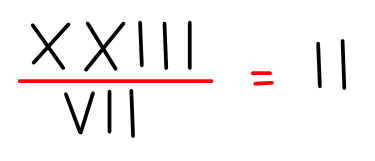
13 matchsticks are arranged to form the Roman numeral equation 23/7 = 2.  This is obviously wrong.  Move one of the matchsticks to make the equation "correct."  (No fair moving the division bar or the equal sign. )

Wednesday, March 5, 2014

can 5-year-olds learn calculus?

You can check out this book by Maria Droujkova here
I stumbled on this article from The Atlantic over the weekend, and I have really been giving it some thought.  Take a couple minutes if you like and read it here, or you can just read my summary below.  

Some summary points:

  • The way we teach math is contrary to the way the human brain, children, or mathematics works.
  • Early emphasis on arithmetic is bad for kids and can lead to negative attitudes about math.
  • The complexity of an idea and the difficulty of doing it are different.  An idea can be simple to understand but difficult to do.  
  • Games and free play are efficient means by which children learn.
  • By exposing children to the ideas of calculus and algebra early you build a "canopy of high abstraction that does not whither."
  • There are levels of understanding and there is no expectation that children will have a formal understanding of the mathematics early on.
  • Children need a voice in their learning and the ability to choose what and how they learn. 
  • Push back to these ideas comes from two camps. The first are those that think parents will push their kids too hard when they find out that they can "do calculus" in elementary school.  The second group thinks that essential computational skills will be lost.  
I have been teaching AP Calculus AB for more than 20 years and there is very little about this curriculum that I have not mastered at this point.  I have a clear understanding of the large questions that are answerable through the use of calculus and the details required to reason to a correct solution to such questions.  

I think that I have some real questions about the practice of leading children to calculus suggested by Maria Droujkova.  Some of it comes from the fact that for the past twenty years, my most successful calculus students were those that had completely mastered the foundational arithmetic skills required in support of the calculus.  I can certainly have a conversation about fractals and even wander into the ideas of infinitesimals with a 1st grader, but there is literally no chance that anything will come of that conversation other than, "This is cool."  Even if this child was taught some kind of procedural steps that led to a solution to a question they asked, I am sure they would not have any understanding of why the did any of the steps or what any of it meant.

One of the hardest things I have to do is teach my students how to see the forest for the trees.  Every day we look at the toolbox that is calculus and discover the amazing problem solving tools that allow us to solve both practical problems of changing quantities and growing volumes, but also to logically prove why a particular formula from geometry or technique from algebra actually works.  In many ways I feel like calculus is a culmination of a dozen years of mathematics, giving students the means to literally fly above the trees of questions and see the connections, the intertwining branches of the entire forest.  

So perhaps this really comes down to a matter of semantics.  What does it mean to teach a 5-year-old calculus?  What does it mean to teach the same subject to a high school student?  It's simply not the same thing.  And in my mind, that's ok.  Showing a 5-year-old that math is cool is absolutely fine with me.  Please, go ahead and spark curiosity!  Show kids fractals, wow them with infinity, expose them to the reasons why we want and need mathematical knowledge.  

But while they're building towers with Legos and creating origami snowflakes, don't forget to teach them to make change, calculate a tip, and choose a cell phone plan.  We need those skills too, maybe even more.  

Tuesday, February 25, 2014

TEDTuesday: the best stats you've ever seen

This talk from Hans Rosling is one of my all time favorites.  I always use it in my Leadership and Service course when we talk about service projects in the developing world.  But it is truly a beautiful illustration of statistical data.  It simply turns what could be a complicated set of numbers into a fabulous explanation of change over time.  Truly incredible! 


Monday, February 24, 2014

pants on fire

Consider this gallop poll from October, 2012, just a few weeks before the election.  What conclusions would you draw from looking at the graphic?  Does it seem like Romney has a good lead?  Does it seem Romney is pulling ahead?  There's a lot of unanswerable questions in this graphic that are really important if you want to understand what the data is telling you.

First what is the sample size?  Is it 20 people or 1000?   
How were people polled? Registered voters, likely voters, random folks?
How sure are you of your results?  What if I said the pollsters were 80% confident?  What if they were 99% confident?

All of these questions are important and because you don't know the answers, the pollsters can draw whatever conclusion they want from the data.

Here's what I mean.  What if the accompanying text told you  that 1000 random registered voters were surveyed.  I hope that would make you more confident than if 20 people in Chicago were selected.  It is Gallop, so let's assume those 1000 random, registered voters are guaranteed. 

What if you knew that the margin of error was plus or minus 4%?  What conclusion would you draw about the October 15 poll?  I hope you can see that if the error could be 4%, then the October 15 poll was pretty much a statistical dead heat.  What if I told you the margin of error was plus or minus 2%?  Then you might conclude that Romney was ahead on October 15. 

The sneaky part is that Gallop and anyone using this poll can actually make both of those claims by manipulating how confident they are with the result.  If they are 99% sure of the result, then the margin of error is a whopping 4%.  If they are only 80% confident, then Romney takes the lead.  And the average reader will never know the difference.

So why am I talking about these ideas?  Well, I am teaching my statistics students this information right now, but more importantly, in these kind of political scenarios, where races are fairly close, it is possible to make the numbers say anything you want them to simply by manipulating the sample size and the level of confidence you prefer.  This means that a particular media source can literally call a winner in any close race simply by bending the statistics.  And this explains why two polls can have completely different results. 

I'd like to think that the media is acting with integrity when they report on polls, but to be fair, recent events lead me to believe otherwise.  If you really want to use mathematics to call political races, I would lean toward Nate Silver's blog, FiveThirtyEight.  The man is a statistical genius (yes I have a mad crush on him), and he correctly predicted nearly every race in the 2012 election.  For the sake of harmony in my own life, I'm going to head there during the next election and consider his efforts the most credible source for predicting results.  Then I can skip all the hot arguments on Facebook. 


Monday, February 10, 2014

let's play!

 
Last week I was feeling poorly most of the week and missed a couple of days.  The illness couldn't have come at a better time for my College Algebra class, as we were taking a break from the textbook to work on a project. 


The project required students to work in groups to design a board game that was fun, creative, and implemented math.  The project was actually the brainchild of my colleague, Jen Baselice, and I was happy to give it a shot.


Students had about a week to design a game board, create rules, gather or make all pieces, integrate some mathematics, and play the games.  The results were mixed, with some students focused on making sure there was plenty of math, others working hard to create a pleasing design, and a third group determined to implement "fun" features.  


On the final day I had students evaluate their group members as well as the games themselves.  My focus was on the math, but it turns out the students most appreciated good designs, clear instructions, and fun features.


In a couple of games there were humorous thematic cards designed to enhance the fun.  In "Cap'n Jalen's Quest for the Booty," players were asked which food was Jalen's favorite, with correct answers leading to advances.  In "Boo" cards told players they had morphed into a werewolf and could move forward 3 spaces.  And in "Reality Land," two players landing on the same square resulted in an arm-wrestling match for control of the square.

All in all, it was a welcome break from the winter doldrums and still helped students review important math skills.  If you would like a copy of the instructions and grading rubric, please email me at costellod@trinityprep.org.

Thursday, January 30, 2014

pow!

This week in professional development one of our technology gurus, Jen Baselice, led a lunch and learn session on using Powtoons.  This program allows you to create videos pretty quickly and effectively.  It may be a little tricky to learn at first, but in no time at all, you are up and running.  I am posting my first Powtoon here and invite you to try it.  This one took me about 40 minutes, and it's far from perfect, but it sure is a fun alternative for content delivery. I'll bet students can make some great Powtoons too!  There's a lot more cool features that I didn't use here and I can't wait to get started.  I know the next one will be better and faster!  Did I mention the best part?  It's free! 

Feel free to post questions in the comments below, and I'll do my best to answer them. 

Wednesday, January 22, 2014

answer, please...

Have you ever wanted to ask a math teacher a question?  My students do it all day long.  Here's your chance. For the next 8 hours, I'll answer any and all math questions.  There's no question too silly.  There are questions that are too hard, but if I don't know and can't find out, I'll be happy to tell you that too.  Is there something you've always wondered about?  Is there a puzzle you've always struggled with?  Now's your chance.

And hey, if you know the answer to someone else's question, answer it...  be a math guru, a math nerd...  Now's your chance.  Ask...  or answer...  a question! 

Photo Credit

Thursday, January 16, 2014

quit picking on math

This cartoon has been emailed to me, posted on my Facebook page, and left in my mailbox numerous times.  Surely word problems are not the most confusing, difficult thing ever?  COME ON. There must be analogous cartoons for other disciplines with similar titles.   
How about, how I see particle physics, or how I see Shakespearean histories?  Maybe there should be one titled, I just don't understand you. How I see languages I don't speak. 
Surely there are other things in life that people don't understand... aren't there?

Why does everybody hate math so much?

Photo Credit

Wednesday, January 15, 2014

why did you get this wrong?

Yesterday we gave a school-wide test to many of our high school students.  It was part of a monthly, statewide voluntary "fun" competition called the Florida Math League.  There are always six questions and they range from pretty simple to pretty tough.  Perfect scores are rare.  My calculus students usually average about 3 correct, although there is no calculus on the test.

One question caught my eye.  Many, many of our bright students got it wrong, but it's a common type of word problem.  What do you think?  Would you get this one right?


In a 10-km race, First Runner beat second runner by 2 km, and First Runner beat Third Runner by 4 km.  If all 3 runners always ran at constant rates, by how many km did Second Runner beat Third Runner. 

The answer will be posted below in the comments.  If you're a math teacher teaching Algebra II or above, ask your own students and let me know how well they do.

Why do you think so many people get this kind of problem wrong? 

Photo Credit


Tuesday, January 7, 2014

a hard look at the SAT

This weekend I was working with one of my own children on SAT questions.  We were looking at questions he had either missed or omitted.  I offer a pair of such questions for your consideration. 


Chose the word or set of words that, when inserted in the sentence, best fits the meaning of the sentence as a whole.

The director's __________ anything outside the cocooned world of her film's protagonist is evident in the __________ of the few stilted scenes depicting unrelated events in the lives of other characters.

a) apathy toward ... raptness
b) infatuation with ... timorousness
c) veneration of ... adroitness
d) impatience with ... desultoriness
e) honesty about ... disingenuousness


Solve the problem and choose the correct answer.

If j is a positive integer and the remainder when j is divided by 11 is 5, what is the remainder when 3j+2 is divided by 11?

a)  3
b)  5
c)  6
d)  8
e)  9

So I have some questions about these two examples, both rated "hard" by the SAT folks.

  • Which question was harder for you?
  • What is the purpose of each question in the context of English or math?
  • What does the ability to answer either of these questions tell you about a person?
  • Would the ability to answer these questions help you be more successful in college?  If so, how?

Genuine discussion requested here... 

(I know many of you are wont to wander back over to my Facebook page to discuss, but I am hoping you'll do it here.  I've made commenting easier at this site, and you can even be anonymous if you like.) 


P.S.  The answers to the above questions are d and c. 

Photo Credit

Thursday, December 12, 2013

building walls

This week in all of our classes we are reviewing for exams.  I decided to try a free online tool called Padlet that would allow students to collaboratively build review sheets (like posting stuff on a bulletin board or wall) that could contain text, images, links and videos.  The students were assigned to groups and given guidelines as to how many posts, what was expected, and how they were going to be evaluated.  They took to the project like ducks to water and didn't look up for 40 minutes. 

You can see one such wall built  in progress here