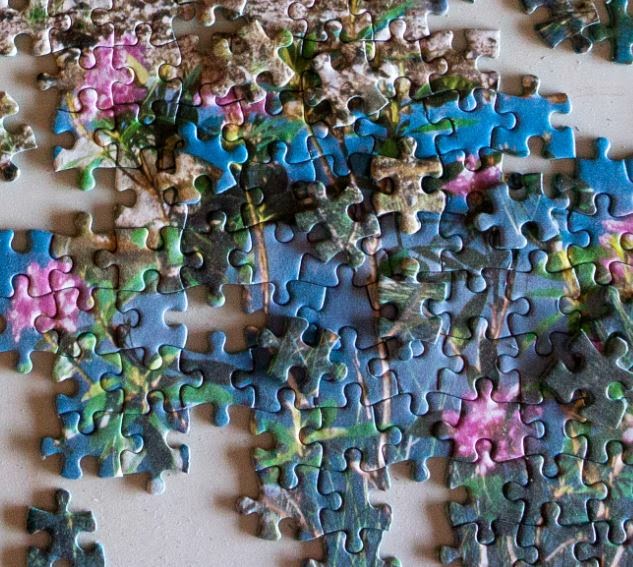
In college I discovered that I loved psychology and added several psychology courses to my math major as an undergrad and in graduate school. One of those courses, History and Systems of Psychology, was a senior level survey course taught by one of my favorite undergraduate professors, Dr. Howard Thorsheim. The course was designed to cover 100+ years of psychological study and development in detail. At the end of the course we were to know the details of the many prominent names in psychology, their lives, their theories, their strengths and weaknesses.
I dove into this course and created pages of detailed notes and hundreds of note cards. I aced every test along the way and was fully confident that I would rock the final exam. I was actually excited to take the exam, thrilled that I had mastered the material and had developed the techniques and work-ethic required for excellence in a challenging college level course.
About a week before exams I was sitting in class when Dr. Thorsheim threw a wrench in my works. He asked the class to vote as to whether the course would actually have an exam. Not surprisingly, the class voted overwhelmingly to skip the final and with that vote, the course was over.
At the time I felt really disappointed, as if all that work was for nothing. It took me many years before I realized the value of the learning I had done. Certainly this deep and thorough understanding of the development of psychology informed my efforts as a teacher of AP Psychology. It also guided my interactions with colleagues and students and taught me much about myself.
Thirty years later I realize the value of learning for its own sake. I am an avid reader on many topics and have done much research on topics in psychology and mathematics over the years, not because I needed to, but because I wanted to. I often wonder how my students would react if I told them there was no exam in my class, or if I made the exam exceptionally easy and unworthy of their efforts.
I imagine some would feel let down, as if their efforts were not rewarded, their knowledge unrevealed. The pursuit of knowledge for external rewards requires evaluations like exams for closure, assessments to make the efforts worthwhile.
But what if kids learned for the sake of learning, studied math or science or psychology because it was interesting or useful rather that simply for a grade? We all know there's some great psychology and a real discussion in that.
If you'd like to find out how schools of the future might be redesigned from the ground up, this article from Education Week might give some insights.
Showing posts with label Politics. Show all posts
Wednesday, May 28, 2014
Tuesday, May 27, 2014
exams... what are we testing??
Most people know what the 2nd amendment is about. But do you know what the 10th amendment says? The 17th? I can't recall, but I can find out in under a minute using my phone. Do you think knowledge of the amendments should be required knowledge for a citizen to vote in this country? Do you even know how many constitutional amendments there are?
This week our underclassmen will finish off the year by taking exams. Each exam is 60-90 minutes long and is meant to assess learning in all of the topics discussed over the last semester. My own children are in their rooms right now studying.
An interesting study by Larsen, Butler, Roediger from 2009 comparing repeated study of topics to repeated testing on topics demonstrated that repeated testing of students with feedback over time does a better job of improving recall. Thus it is not enough to simply relearn ideas throughout a semester. Students will recall information better through repeated testing.
A 2010 study by Maitreyi Raman demonstrated that several short bursts of instruction were more effective in enhancing long-term recall that a single long session. Thus four one hour sessions, each a week apart, led to better recall than a single four hour session. Both of these scenarios suggest that there are a variety of means to deliver content and that all methods are not equal if the goal is improving recall.
But I guess the real question I want to ask is do we actually want to increase recall in our students? As we think about what it is we want our students to learn, how important is it that they are able to recall civil war battles, elemental qualities from the periodic table, the unit circle in trigonometry, or the characters names from every play they read in English.
Who were the generals at Gettysburg? What is the atomic number of potassium? What is the sine of 135 degrees? Who was Othello's wife?
Did you know the answers to these questions? If so, congratulations! You should try out for Jeopardy! But what does it actually mean about you if you know them, or more likely, if you don't?
Students spend a lot of time cramming such things into their heads, and often forget them within hours or days of exams. Thus I would ask us to think carefully as educators, as parents, and as leaders about what we are teaching in school. Is it important that our children be able to recall information that is readily available on the internet?
Obviously a literate, well-informed population requires shared knowledge, a foundation of information and cultural reference that informs our decision making, advanced studies, and basic conversation. Dare I call this foundational knowledge our common core? (Bet you didn't see that coming.)
And while we all debate who should determine this core, what it should be, how it is best taught, and how the students and teachers will be assessed, my students and students across the nation will continue to take the same old exams. Based on student recall on these exams, we will determine grades and futures for students, teachers, and schools.
How much does it matter in your life if you remember the 17th amendment? If you're trying to be a senator, probably a lot. But for the rest of us, surely there are more important things.
This week our underclassmen will finish off the year by taking exams. Each exam is 60-90 minutes long and is meant to assess learning in all of the topics discussed over the last semester. My own children are in their rooms right now studying.
An interesting study by Larsen, Butler, Roediger from 2009 comparing repeated study of topics to repeated testing on topics demonstrated that repeated testing of students with feedback over time does a better job of improving recall. Thus it is not enough to simply relearn ideas throughout a semester. Students will recall information better through repeated testing.
A 2010 study by Maitreyi Raman demonstrated that several short bursts of instruction were more effective in enhancing long-term recall that a single long session. Thus four one hour sessions, each a week apart, led to better recall than a single four hour session. Both of these scenarios suggest that there are a variety of means to deliver content and that all methods are not equal if the goal is improving recall.
But I guess the real question I want to ask is do we actually want to increase recall in our students? As we think about what it is we want our students to learn, how important is it that they are able to recall civil war battles, elemental qualities from the periodic table, the unit circle in trigonometry, or the characters names from every play they read in English.
Who were the generals at Gettysburg? What is the atomic number of potassium? What is the sine of 135 degrees? Who was Othello's wife?
Did you know the answers to these questions? If so, congratulations! You should try out for Jeopardy! But what does it actually mean about you if you know them, or more likely, if you don't?
Students spend a lot of time cramming such things into their heads, and often forget them within hours or days of exams. Thus I would ask us to think carefully as educators, as parents, and as leaders about what we are teaching in school. Is it important that our children be able to recall information that is readily available on the internet?
Obviously a literate, well-informed population requires shared knowledge, a foundation of information and cultural reference that informs our decision making, advanced studies, and basic conversation. Dare I call this foundational knowledge our common core? (Bet you didn't see that coming.)
And while we all debate who should determine this core, what it should be, how it is best taught, and how the students and teachers will be assessed, my students and students across the nation will continue to take the same old exams. Based on student recall on these exams, we will determine grades and futures for students, teachers, and schools.
How much does it matter in your life if you remember the 17th amendment? If you're trying to be a senator, probably a lot. But for the rest of us, surely there are more important things.
Monday, May 5, 2014
the myth of the hero teacher
![]() |
| Photo Credit |
If you have been reading along with me this year, you know in April I also wrote about the idea of teachers as heroes in this post. I am thrilled that Ricket's article so clearly explains the fallacy of thinking about teachers as heroes.
Her final two paragraphs are a call to action that brilliantly points to a path for genuine improvement in American education. I hope you will take her words to heart.
We need to draw more attention not to how individual teachers overcome immeasurable odds, but to ways in which we can reduce those odds to begin with. If teachers need to be creative and honest in the classroom—if that’s what makes a teacher a “hero”—then we need to dismantle the obstacles to creativity and free speech on a wide scale so that those teachers become the rule, not the exception. We need to promote teacher creativity by reducing the amount of standardized testing and the resulting fear of poor results and loss of funding. If being authentic were really a quality valued in great teachers, we would celebrate inclusive, empowering teachers regardless of race, ethnicity, gender, sexual orientation or ability.
The dramatic light the hero myth casts on teachers is one I think we—as teachers—should wholeheartedly work to avoid. The example of a few isolated individuals working alone in red capes makes for an inspiring narrative, but it won’t transform our troubled educational system. We need a new narrative for teaching, one that we write together, one that unites us as educators and honors our students.
You can read more from Allison Ricket here.
Sunday, April 27, 2014
education is creating a million cans of peas
![]() |
| Image credit |
Without saying too much about the ridiculousness of cancelling a kindergarten show in favor of college prep, I believe that education is on that road to hell. The profession is stuffed to the brim with well-meaning people. Teachers, administrators, parents, and politicians are all acting in what they believe is "the best interest of children." But in the end, all these well-intentioned folks are acting in concert, but they're on the wrong road. Their well-intentioned march has left education, and our children, completely lost.
Let's start at the "top." Politicians set broad federal or state policies that attempt to serve the dual goals of educational excellence and accountability. Administrators set school policies that attempt to serve the parallel goals of educational excellence and school rankings. Teachers set classroom policies to serve both the goals of educational excellence and their own performance rating. Involved parents set home policies that attempt to serve the twin goals of educational excellence and high test scores.
You can see there's a common goal here, that of educational excellence, and if this were the only goal, perhaps something great might be happening in education. But each constituency has a second goal, one that qualifies the first, one that compromises the integrity of the process and of those involved.
Here's what I mean.
Politicians want excellence, but all excellence must be measurable by a standardized test or some other objective criteria. As a result, they value only those things that can be measured in this way.
Administrators want excellence but only excellence that comes from high scores on whatever process has been developed to measure and grade the school. Therefore they value the criteria that improves the school's grade. Standardized test scores, enrollment and performance in AP and IB courses, student attendance, graduation rates, and continuous demands for improvement have all been or continue to be factors in school ratings and are therefore valued by administrators.
Teachers want excellence but only the excellence that advances their students and by extension, their own careers. For example, in Florida, if students do not perform as expected on the FCAT, then the teacher's rating and salary suffers.
And finally, of course parents want excellence as well, but only the excellence that results in a strong performance on these same standardized tests along with high grades.
The reason that our educational system has become so compromised is because the phrase "Educational Excellence" is now defined as "high test scores." We have turned schools into test prep factories.
The irony in all this testing is that our schools might well have met this goal, they might have had high scoring test-takers, if they had been given the time, resources, and training to actually achieve the goal. Instead the curriculum, tests, and expectations change every two or three years and the whole system must begin again from scratch. Impatience destroys even the best laid plans.
So I am suggesting we change how we think about education. What if we defined "Educational Excellence" as "helping children reach their individual potentials and creating an informed citizenry, compassionate and responsible, physically healthy, and having a deep appreciation of the arts and humanities." Don't we want a generation of children like this as our legacy?
As long as we think about schools like factories and children as cans of peas, education will continue to fail. The last thing we need is a million more cans of peas. Let's be honest. Does anyone really like canned peas?
Tuesday, April 1, 2014
hero worship
Consider a question like, “How many pairs of shoes do you
own?” I am guessing most people in the
U.S. would answer somewhere in the neighborhood of two to thirty pairs of
shoes. According to the Daily Mail, the average woman in the
U.K. owns nineteen pairs of shoes but wears only seven. But that’s not important. What I want to talk about is the woman that
owns two hundred pairs of shoes. She is
unusual by almost any standard and statisticians would call her an
outlier. Outliers are pieces of data
that alter the outcome in significant ways, so much so that sometimes
statisticians throw them out on the grounds that they are not reflective of the
general population. Outliers are impactful. We can decide how much impact we want them to have.
It seems love of the outlier colors our every desire, our every
decision. We want our schools to “pull themselves up by their bootstraps” no matter the budget or the challenges of poverty, violence, and health that the children face. We demand that teachers meet every child’s needs, differentiate every lesson, overcome every setback, because that’s what Jaime Escalante and a few other teachers somehow managed to do. We envision our schools and our teachers as somehow able to work miracles and fix what has taken decades to break. And we don’t even apologize for our expectations.
Part of what's hamstringing education today is the demand for outliers. Heroes do things faster and better, and so do our best schools, teachers, and students. But this cannot be the expectation. We can certainly use excellence as a model, to use awesome as inspiration, but in the end, to expect it from everyone is not reasonable. There's a reason why everyone cannot be an outlier. Outliers are rare. Heroes are rare. Demanding more does not make a hero.
On the flip side, I think it’s perfectly o.k. to want these things, to hope for a hero. But hope is not a plan. I am a math teacher. My job is to teach kids math, assuming they want to learn, and they had breakfast, and they didn’t have a fight with their boyfriend, and they can concentrate for more than a minute, and.. and… and… If I’m lucky, in the process of teaching math, I might just stumble into some lessons of hard work, compassion, leadership, overcoming adversity, and helping others.
So there. You learned
a little statistics.
Now consider this movie plot. An experiment in a lab causes a spider to
become infected with a radioactive virus.
The spider then bites a man. The
man dies. The spider dies. End of story.
Not much of a story is it? No one
tells this story because it is both predictable and unexceptional. No one cares about the story where Peter
Parker dies. But we love the story where
Peter Parker becomes a super hero.
Spiderman is unusual. He is an
outlier.
Our deep worship of and fascination with the outlier is
culturally entrenched. Everyone loves
the story of a person that overcomes incredible odds to excel. We also watch the fall of our heroes played out in
the media with glee.
So how does this relate to education?
It seems love of the outlier colors our every desire, our every
![]() |
| Photo Credit |
decision. We want our schools to “pull themselves up by their bootstraps” no matter the budget or the challenges of poverty, violence, and health that the children face. We demand that teachers meet every child’s needs, differentiate every lesson, overcome every setback, because that’s what Jaime Escalante and a few other teachers somehow managed to do. We envision our schools and our teachers as somehow able to work miracles and fix what has taken decades to break. And we don’t even apologize for our expectations.
Part of what's hamstringing education today is the demand for outliers. Heroes do things faster and better, and so do our best schools, teachers, and students. But this cannot be the expectation. We can certainly use excellence as a model, to use awesome as inspiration, but in the end, to expect it from everyone is not reasonable. There's a reason why everyone cannot be an outlier. Outliers are rare. Heroes are rare. Demanding more does not make a hero.
On the flip side, I think it’s perfectly o.k. to want these things, to hope for a hero. But hope is not a plan. I am a math teacher. My job is to teach kids math, assuming they want to learn, and they had breakfast, and they didn’t have a fight with their boyfriend, and they can concentrate for more than a minute, and.. and… and… If I’m lucky, in the process of teaching math, I might just stumble into some lessons of hard work, compassion, leadership, overcoming adversity, and helping others.
That’s it folks. That’s
a good day. I’m not a hero. I’m a
teacher. If you want me or my school or
these kids to be heroes, to be outliers, you’re going to have to help. And by help I don’t mean inventing more hoops
for us to jump through, more tests to take.
I mean putting your time, your money, and your wisdom where your mouth
is. I mean actually doing something to help schools, teachers, and students.
Does your school have the supplies and computers it needs to
be successful? Do your school’s teachers
have the time and training to do the job well?
Do your school’s students have the tutors and one-on-one attention they
need to be successful? No? So what are YOU going to do about it?
What if I expected YOU to be an outlier? Hey hero, how does that feel?
Thursday, March 27, 2014
a thousand little pieces
This week we had a normal Wednesday in the life of my school. When I say normal, I mean that nothing unusual happened. For example, in addition to teaching, I had 3 important meetings. One was about the progress my department is making in using technology, the second was about developing a scope and sequence document for the math department, and the third was an informational pitch on a new learning management system the school is considering. All of these things are important to my job, but not particularly unusual.
What got me thinking was not my three little meetings, but the fact that they are such a small part of the workings of our school. Tons of events went on, things that make this school move forward, and for every item I can list here, there were likely dozens of others happening that I know nothing about. For example, 150+ different sections of courses were taught today, a day in which students had only three 80 minute classes. We had separate chapel services for both the middle and upper school students. Upper school students enjoyed listening to a career day speaker talk about working for Disney. Our visiting writer held a creative writing workshop for interested students and will do a reading of his own work this evening. Our thespian troupe left for state competition this afternoon and our baseball and softball teams had games today. The rest of our spring sports teams (tennis, lacrosse, track) had practice and there was a faculty yoga class. Prospective students and their families toured our campus, there was a meeting about the construction of a new middle school, the drum line had practice, and students made up tests after school. I sincerely hope all 1000 people on this campus stopped for a moment or two for lunch. After school bathrooms will be cleaned, floors swept, trash cans emptied. The phones were answered, the grass mowed, and the mail delivered. Someone paid the bill to keep the lights on.
It seems so easy when you peer at a school through the tiny peephole afforded the outside world, but schools are a thousand moving parts, dozens of interlocking pieces that build not just a pile of homework for kids, but a life for every member of the community. Every adult in my community is an educator, whether they are in the classroom or not and every single teacher also coaches a sport or sponsors a club, supervises the cafeteria or administers tests after school.
People often wonder what teachers do all day and why days that end at 3:00 are so much longer. I challenge you to ask a teacher what she does all day, to ask your student what goes on at his school beyond the classes. I bet you'll be surprised, even awed as I am by how much is expected of the people that work so hard to educate our kids.
Maybe that's not what schools should be, but who am I to say? It's hard to find time to look up for a moment and see the whole puzzle when you're wrapped up in a thousand little pieces.
What got me thinking was not my three little meetings, but the fact that they are such a small part of the workings of our school. Tons of events went on, things that make this school move forward, and for every item I can list here, there were likely dozens of others happening that I know nothing about. For example, 150+ different sections of courses were taught today, a day in which students had only three 80 minute classes. We had separate chapel services for both the middle and upper school students. Upper school students enjoyed listening to a career day speaker talk about working for Disney. Our visiting writer held a creative writing workshop for interested students and will do a reading of his own work this evening. Our thespian troupe left for state competition this afternoon and our baseball and softball teams had games today. The rest of our spring sports teams (tennis, lacrosse, track) had practice and there was a faculty yoga class. Prospective students and their families toured our campus, there was a meeting about the construction of a new middle school, the drum line had practice, and students made up tests after school. I sincerely hope all 1000 people on this campus stopped for a moment or two for lunch. After school bathrooms will be cleaned, floors swept, trash cans emptied. The phones were answered, the grass mowed, and the mail delivered. Someone paid the bill to keep the lights on.
It seems so easy when you peer at a school through the tiny peephole afforded the outside world, but schools are a thousand moving parts, dozens of interlocking pieces that build not just a pile of homework for kids, but a life for every member of the community. Every adult in my community is an educator, whether they are in the classroom or not and every single teacher also coaches a sport or sponsors a club, supervises the cafeteria or administers tests after school.
People often wonder what teachers do all day and why days that end at 3:00 are so much longer. I challenge you to ask a teacher what she does all day, to ask your student what goes on at his school beyond the classes. I bet you'll be surprised, even awed as I am by how much is expected of the people that work so hard to educate our kids.
Maybe that's not what schools should be, but who am I to say? It's hard to find time to look up for a moment and see the whole puzzle when you're wrapped up in a thousand little pieces.
Wednesday, March 12, 2014
why you should care about Rick Roach
![]() |
| Photo Credit |
I won’t seek a 5th term on the Orange County School BoardMy many years as an Orange County’ School Board member representing District 3 have been rewarding beyond description. What I’ve learned, my friendships with students, teachers, administrators, constituents, members of civic and business organizations and fellow board members, the satisfactions of problems solved—even wrestling with problems that have no good solution—have unquestionably changed me for the better.But I’m leaving in November, and I want to say why. I’m not leaving because I feel I can no longer make a difference in Orange County, but because I want to make a bigger difference than my role allows.First, after 42 years as an educator and 16 as a school board member, I no longer recognize my profession. People who have never taught, or have been out of the classroom too long to remember teaching’s complexity, now control the institution. Education policy makers, who wouldn’t dream of telling surgeons how to wield a scalpel or telling pilots how to land an airliner, seem perfectly comfortable dictating rigid guidelines for teachers.Second, the push to standardize has gotten out of control. As the world’s problems grow increasingly complex, we don’t need standardized minds but fresh thinking. We’ve long led the world in creativity and ingenuity, but those now running the education show in Washington and Tallahassee have steadily taken away the trust, freedom and respect that once allowed teachers to use their strengths effectively. I want to use my knowledge and experience to help solve these problems.Finally, it’s the drive to test, test, and re-test that leads me to conclude that it’s time for me to do more to change this agenda. That a score on a single, machine-scored, multiple-choice test can erase 180 days of work and override teacher judgment is insulting. Test manufacturers say, in print, that no single measure is accurate enough to base life-changing decisions on it, but their warnings are ignored, as is the fact that failure rates are set even before the tests are administered.We’re so caught up in the testing frenzy, we even insist on testing kids with severe brain impairments, or who have little or no brain at all. Immigrant children who arrive in America speaking no English are tested after only one year, when research clearly says it takes at least four or five years to become proficient in a new language. Pass-fail cut scores ignore margins-of-error, forcing kids to repeat a class for a full year because they missed the cut by a point or two. This has to end.It has been my pleasure to serve you for the past 16 years and I want to continue to be your voice and search for common sense solutions, always putting our students first. My passion for real education tells me to get closer to the battlefield where decisions are being made. There are better ways to educate than we’re using and I want to find and promote them.Yours in Education,Judge “Rick”Roach
Monday, March 10, 2014
of fishes and wishes...
A few years a ago representative from the Orlando Magic came to our school and offered students a pair of free tickets to a game if they would share their dreams for the future. Some of our students could not even tell us their dreams. As a result, in my leadership class I assign students the task of looking to the future and vocalizing their dreams. I think this is an important activity. By vocalizing our dreams, we can begin the conversation of why and how that can actually lead to dream fulfillment and success.
Dreams don't just happen, they are built through hard work and sacrifice, hearing the word "no" and trying again, believing in the dream's value and the inherent value in the self. Dreams are incredibly important and so I am asking you to share your ideas, to build a dream with me...
If you had one wish for education, one dream for your child, for your school, for teachers, for education, what would it be?
Will you share your dream in the comments? If you could have one wish, one swim in the sea, what would it be?
P.S. My childhood dream was to be secretary of education.
My current wish is to get politicians out of education.
Your turn!
Tuesday, March 4, 2014
see now I'm just mad
Yesterday I had a massive computer meltdown and I know it's supposed to be TEDTuesday, but I have been thinking about this post all weekend and I've decided I really need to say something, but before I do, let me tell you a story.
Consider Mary. Mary enrolled in Weight Watchers. Every week she went to a meeting and weighed in. One week she went in and did really well. She lost 5 pounds! Everyone gave her high fives. She even won the weekly award for the group! Woo hoo! The next week she weighed in, but she only lost 2 pounds. Now 2 pounds is still awesome, but it was not as good as the previous week so the group ridiculed her. It turns out that they expected her to lose more and more weight every week. It didn't take Mary long to quit the group.
Am I crazy or does this seem silly? It doesn't make sense to ask people to continally lose more and more weight. It also makes no sense to ridicule her efforts,. Most people respond pretty poorly to ridicule. If Mary were on The Biggest Loser, I might think about this scenario differently, but this is not a game show and no Weight Watchers program would ever do such a thing.
Now consider Simone Ryals. In 2012 she was a state finalist for a Presidential Award for Excellence in Mathematics and Science Teaching Program. Her students did exceptionally well in science, many earning top scores, 5's on the State Science exam, an exam that has a 40% passing rate.
But this year the state raised the standards on the test so that students must score even higher to earn a 5. This I understand. States are in the business of slowly raising standards, of pushing kids further and further in the hopes that we can get American education back on track. Simone's students still did well, but they did not score as highly on the State Science exam. Her students earned more 4s and 5s that were not quite as high.
What yanks my chain is that Simone's students' lower scores mean that she is now ranked as an inferior teacher. Despite the fact that her students still more than passed the exam that 60% failed, she is inferior. And worse, her name will be published in the local papers so that parents will know which teachers are "great" and those that are "inferior."
Look, I get it. We are all trying to improve education. Parents want information and test scores may seem like a good way to measure a teacher's effectivness. But it's not that simple and anyone with a lick of sense knows that we need teachers like Simone Ryals. We can continue to measure a teacher's effectiveness by a single test score, to force teachers to work in a rigged system, or we can do better and create a system that is fair and helps all teachers and students improve. Our kids deserve it. Simone Ryals deserves it. Anyone who disagrees should feel free to become a 5th grade science teacher. If we don't change the system, we're going to need them.
Photo Credit
Consider Mary. Mary enrolled in Weight Watchers. Every week she went to a meeting and weighed in. One week she went in and did really well. She lost 5 pounds! Everyone gave her high fives. She even won the weekly award for the group! Woo hoo! The next week she weighed in, but she only lost 2 pounds. Now 2 pounds is still awesome, but it was not as good as the previous week so the group ridiculed her. It turns out that they expected her to lose more and more weight every week. It didn't take Mary long to quit the group.
Am I crazy or does this seem silly? It doesn't make sense to ask people to continally lose more and more weight. It also makes no sense to ridicule her efforts,. Most people respond pretty poorly to ridicule. If Mary were on The Biggest Loser, I might think about this scenario differently, but this is not a game show and no Weight Watchers program would ever do such a thing.
Now consider Simone Ryals. In 2012 she was a state finalist for a Presidential Award for Excellence in Mathematics and Science Teaching Program. Her students did exceptionally well in science, many earning top scores, 5's on the State Science exam, an exam that has a 40% passing rate.
But this year the state raised the standards on the test so that students must score even higher to earn a 5. This I understand. States are in the business of slowly raising standards, of pushing kids further and further in the hopes that we can get American education back on track. Simone's students still did well, but they did not score as highly on the State Science exam. Her students earned more 4s and 5s that were not quite as high.
What yanks my chain is that Simone's students' lower scores mean that she is now ranked as an inferior teacher. Despite the fact that her students still more than passed the exam that 60% failed, she is inferior. And worse, her name will be published in the local papers so that parents will know which teachers are "great" and those that are "inferior."
Look, I get it. We are all trying to improve education. Parents want information and test scores may seem like a good way to measure a teacher's effectivness. But it's not that simple and anyone with a lick of sense knows that we need teachers like Simone Ryals. We can continue to measure a teacher's effectiveness by a single test score, to force teachers to work in a rigged system, or we can do better and create a system that is fair and helps all teachers and students improve. Our kids deserve it. Simone Ryals deserves it. Anyone who disagrees should feel free to become a 5th grade science teacher. If we don't change the system, we're going to need them.
Photo Credit
Thursday, February 27, 2014
how parents can help their children succeed in school
So it's happened. Your wonderful, happy child earned a less-than-stellar grade in school. Whether this happens in 1st grade or late in high school, only once or many times, it can be a really stressful time. Parents want their children to succeed and love school. Students want school to be fun, social, and interesting. Teachers need to prepare students for high stakes tests or to advance to the next level. Can you see how the three parties involved in education sometimes have different and even competing interests?
I think it's wonderful when parents want to get involved in the educational process and help their children succeed. There's a clear set of steps to follow and by doing so, the three sides of the educational triangle have the best chance of success.
Step 1: Talk to your child. You don't need to yell. Just ask questions.
The answers might be great, but may also include comments like, "Everyone did poorly," "The teacher hates me," "There was too much work," or "It took too long."
As the parent, you have to ignore at least some of this. It is unlikely that everyone did poorly. More likely your child and perhaps a couple of friends did poorly, but if everyone did poorly, there would be remediation.
"The teacher hates me" is most often projection. Students both want to be liked and hate getting bad grades and often the negativity of poor performance gets mixed up in personal feelings. As a 27 year teaching veteran, I can honestly say that it's hard to hate a child. It's easy to hate their behaviors and so it's best for everyone to try to remove all the emotional baggage from the conversation and focus on these behaviors.
The last two student comments are critical places for the parent to step in. Most students want to spend the least amount of time possible on homework. It's in their nature. Work is not always fun and so it makes sense to do the minimum, especially if things have been going well for a while. What students need to understand is that when a class becomes difficult, they need to spend more time on it. Their inclination is to actually spend less because they don't like it or it's hard, and this creates a feedback loop that doesn't take long to spiral into failure. Time is often a challenge for our over-scheduled students, but parents who help their children set aside additional time for homework and reprioritize activities have the best chance of helping their children turn things around.
Parents often also want to help their children with the work and this is great if you can do it without yelling, but there are some important guidelines.
It is possible that even after you take all these steps, the progress you seek doesn't happen. Even if your student is spending more time on the work, completing all assignments, and following teacher suggestions, the grades might not improve as quickly or as far as you'd like. Time for Step 2.
Step 2: Contact the teacher and express your concerns and expectations. You don't need to yell. Just ask questions.
Write everything down. Make sure you understand. Ideally your child is in the conference, but if not, you need to be able to explain the plan.
Implement the plan. Follow through with your child. Accept no excuses. Check work, monitor study time, review flashcards together, do whatever you decided was the plan. Check in with the teacher about classroom progress and behavior.
It is possible that even after you take all these steps, the progress you seek still doesn't happen. This is frustrating, but not the end of the world. Sometimes your expectations for progress are not realistic for your child or the discipline. Sometimes intellectual processing and maturation takes longer than a week or two. Don't panic. Run through Step 1 again. Ask those questions. Run through Step 2 again. Contact the teacher. Make sure you and your child have done everything you said you would. Develop another plan. Keep working on it. (If you think all this is too much effort, then maybe you should reconsider your expectations.)
When you reach the point where you feel you and your child have done everything possible, then and only then should you implement Step 3.
Step 3: Contact someone else in the school.
I think it's easy to start at the top, to speak to a principal or department chair and express your grievances. But the reality is, the administrator will have to turn around and discuss the situation with the teacher, so in a lot of cases you are simply putting someone in the middle of a situation that will resolve itself in exactly the same way.
I would never suggest that there aren't poor teachers and problems that can only be resolved by administrators. But more often than not, these are the exceptions. Most issues can be handled through communication between parents, students, and teachers. It's also important to remember that we all face challenges and problems that are difficult. Teaching your children how to work through these problems is an important part of growing up and the responsibility of both schools and parents.
There are a lot of hard realities that we parents have to face in dealing with our children's setbacks. We must accept that our children are not the smartest in the class or equally able in every subject. Not every child will get an A in a particular class and most children do not get A's in every subject. Many schools have various tracks so that the pace of the learning meets the developmental progress of the children. This means that not every child will nor should be in the advanced track. Just because a parent is an engineer or a poet doesn't say anything about a child's abilities or interests.
Whether a student's challenges come in geometry, history, chemistry, English, or French is actually pretty unimportant. We all have strengths and weaknesses. Learning to leverage the strengths and improve the weak areas is the key to success. That's what schools and parents must teach.
In the end, we are all on the same team, the one in which students create their own successes and understanding in school. The parent and the teacher are there to guide and assist, but it is the student that must do the work and learn from the consequences of actions. In school and in life, everyone falls down. What we do next says everything about us.
I think it's wonderful when parents want to get involved in the educational process and help their children succeed. There's a clear set of steps to follow and by doing so, the three sides of the educational triangle have the best chance of success.
Step 1: Talk to your child. You don't need to yell. Just ask questions.
- Why do you think you didn't do well?
- What did you do to prepare?
- Did you complete all the required and review assignments and readings?
- Did you take and study your notes?
- Did you ask the teacher for help during class and/or after school?
- What did the teacher suggest you do? Did you complete the suggestions?
The answers might be great, but may also include comments like, "Everyone did poorly," "The teacher hates me," "There was too much work," or "It took too long."
As the parent, you have to ignore at least some of this. It is unlikely that everyone did poorly. More likely your child and perhaps a couple of friends did poorly, but if everyone did poorly, there would be remediation.
"The teacher hates me" is most often projection. Students both want to be liked and hate getting bad grades and often the negativity of poor performance gets mixed up in personal feelings. As a 27 year teaching veteran, I can honestly say that it's hard to hate a child. It's easy to hate their behaviors and so it's best for everyone to try to remove all the emotional baggage from the conversation and focus on these behaviors.
The last two student comments are critical places for the parent to step in. Most students want to spend the least amount of time possible on homework. It's in their nature. Work is not always fun and so it makes sense to do the minimum, especially if things have been going well for a while. What students need to understand is that when a class becomes difficult, they need to spend more time on it. Their inclination is to actually spend less because they don't like it or it's hard, and this creates a feedback loop that doesn't take long to spiral into failure. Time is often a challenge for our over-scheduled students, but parents who help their children set aside additional time for homework and reprioritize activities have the best chance of helping their children turn things around.
Parents often also want to help their children with the work and this is great if you can do it without yelling, but there are some important guidelines.
- Don't do the work for them. (Only your child should be holding the pencil or typing the words.)
- Stay within your levels of expertise. (If you don't speak Spanish, don't try to help.)
- Accept that at some point you can no longer help because your child has surpassed your knowledge. (This is a good thing) .
- Limit your efforts to 30 minute sessions. (You'll both feel better if you do something different after 30 minutes. You can come back later if needed.)
It is possible that even after you take all these steps, the progress you seek doesn't happen. Even if your student is spending more time on the work, completing all assignments, and following teacher suggestions, the grades might not improve as quickly or as far as you'd like. Time for Step 2.
Step 2: Contact the teacher and express your concerns and expectations. You don't need to yell. Just ask questions.
- Is my child doing his/her part?
- Is there something he/she should do differently or in addition?
- Is there something we can do at home to help?
- Can the teacher or a tutor help after school?
- What are the actionable steps and checks we can complete to measure progress?
Write everything down. Make sure you understand. Ideally your child is in the conference, but if not, you need to be able to explain the plan.
Implement the plan. Follow through with your child. Accept no excuses. Check work, monitor study time, review flashcards together, do whatever you decided was the plan. Check in with the teacher about classroom progress and behavior.
It is possible that even after you take all these steps, the progress you seek still doesn't happen. This is frustrating, but not the end of the world. Sometimes your expectations for progress are not realistic for your child or the discipline. Sometimes intellectual processing and maturation takes longer than a week or two. Don't panic. Run through Step 1 again. Ask those questions. Run through Step 2 again. Contact the teacher. Make sure you and your child have done everything you said you would. Develop another plan. Keep working on it. (If you think all this is too much effort, then maybe you should reconsider your expectations.)
When you reach the point where you feel you and your child have done everything possible, then and only then should you implement Step 3.
Step 3: Contact someone else in the school.
I think it's easy to start at the top, to speak to a principal or department chair and express your grievances. But the reality is, the administrator will have to turn around and discuss the situation with the teacher, so in a lot of cases you are simply putting someone in the middle of a situation that will resolve itself in exactly the same way.
I would never suggest that there aren't poor teachers and problems that can only be resolved by administrators. But more often than not, these are the exceptions. Most issues can be handled through communication between parents, students, and teachers. It's also important to remember that we all face challenges and problems that are difficult. Teaching your children how to work through these problems is an important part of growing up and the responsibility of both schools and parents.
There are a lot of hard realities that we parents have to face in dealing with our children's setbacks. We must accept that our children are not the smartest in the class or equally able in every subject. Not every child will get an A in a particular class and most children do not get A's in every subject. Many schools have various tracks so that the pace of the learning meets the developmental progress of the children. This means that not every child will nor should be in the advanced track. Just because a parent is an engineer or a poet doesn't say anything about a child's abilities or interests.
Whether a student's challenges come in geometry, history, chemistry, English, or French is actually pretty unimportant. We all have strengths and weaknesses. Learning to leverage the strengths and improve the weak areas is the key to success. That's what schools and parents must teach.
In the end, we are all on the same team, the one in which students create their own successes and understanding in school. The parent and the teacher are there to guide and assist, but it is the student that must do the work and learn from the consequences of actions. In school and in life, everyone falls down. What we do next says everything about us.
Monday, February 24, 2014
pants on fire
Consider this gallop poll from October, 2012, just a few weeks before the election. What conclusions would you draw from looking at the graphic? Does it seem like Romney has a good lead? Does it seem Romney is pulling ahead? There's a lot of unanswerable questions in this graphic that are really important if you want to understand what the data is telling you.
First what is the sample size? Is it 20 people or 1000?
How were people polled? Registered voters, likely voters, random folks?
How sure are you of your results? What if I said the pollsters were 80% confident? What if they were 99% confident?
All of these questions are important and because you don't know the answers, the pollsters can draw whatever conclusion they want from the data.
Here's what I mean. What if the accompanying text told you that 1000 random registered voters were surveyed. I hope that would make you more confident than if 20 people in Chicago were selected. It is Gallop, so let's assume those 1000 random, registered voters are guaranteed.
What if you knew that the margin of error was plus or minus 4%? What conclusion would you draw about the October 15 poll? I hope you can see that if the error could be 4%, then the October 15 poll was pretty much a statistical dead heat. What if I told you the margin of error was plus or minus 2%? Then you might conclude that Romney was ahead on October 15.
The sneaky part is that Gallop and anyone using this poll can actually make both of those claims by manipulating how confident they are with the result. If they are 99% sure of the result, then the margin of error is a whopping 4%. If they are only 80% confident, then Romney takes the lead. And the average reader will never know the difference.
So why am I talking about these ideas? Well, I am teaching my statistics students this information right now, but more importantly, in these kind of political scenarios, where races are fairly close, it is possible to make the numbers say anything you want them to simply by manipulating the sample size and the level of confidence you prefer. This means that a particular media source can literally call a winner in any close race simply by bending the statistics. And this explains why two polls can have completely different results.
I'd like to think that the media is acting with integrity when they report on polls, but to be fair, recent events lead me to believe otherwise. If you really want to use mathematics to call political races, I would lean toward Nate Silver's blog, FiveThirtyEight. The man is a statistical genius (yes I have a mad crush on him), and he correctly predicted nearly every race in the 2012 election. For the sake of harmony in my own life, I'm going to head there during the next election and consider his efforts the most credible source for predicting results. Then I can skip all the hot arguments on Facebook.
First what is the sample size? Is it 20 people or 1000?
How were people polled? Registered voters, likely voters, random folks?
How sure are you of your results? What if I said the pollsters were 80% confident? What if they were 99% confident?
All of these questions are important and because you don't know the answers, the pollsters can draw whatever conclusion they want from the data.
Here's what I mean. What if the accompanying text told you that 1000 random registered voters were surveyed. I hope that would make you more confident than if 20 people in Chicago were selected. It is Gallop, so let's assume those 1000 random, registered voters are guaranteed.
What if you knew that the margin of error was plus or minus 4%? What conclusion would you draw about the October 15 poll? I hope you can see that if the error could be 4%, then the October 15 poll was pretty much a statistical dead heat. What if I told you the margin of error was plus or minus 2%? Then you might conclude that Romney was ahead on October 15.
The sneaky part is that Gallop and anyone using this poll can actually make both of those claims by manipulating how confident they are with the result. If they are 99% sure of the result, then the margin of error is a whopping 4%. If they are only 80% confident, then Romney takes the lead. And the average reader will never know the difference.
So why am I talking about these ideas? Well, I am teaching my statistics students this information right now, but more importantly, in these kind of political scenarios, where races are fairly close, it is possible to make the numbers say anything you want them to simply by manipulating the sample size and the level of confidence you prefer. This means that a particular media source can literally call a winner in any close race simply by bending the statistics. And this explains why two polls can have completely different results.
I'd like to think that the media is acting with integrity when they report on polls, but to be fair, recent events lead me to believe otherwise. If you really want to use mathematics to call political races, I would lean toward Nate Silver's blog, FiveThirtyEight. The man is a statistical genius (yes I have a mad crush on him), and he correctly predicted nearly every race in the 2012 election. For the sake of harmony in my own life, I'm going to head there during the next election and consider his efforts the most credible source for predicting results. Then I can skip all the hot arguments on Facebook.
Tuesday, February 11, 2014
YOU are a leader!
I thought I would share this TEDTalk that is one of my favorites. Perhaps I should regularly feature talks on TEDTuesday. There are so many wonderful choices!
What I love about Drew Dudley's talk is that everything and anything we do can make a difference. We never know when something small, something we've forgotten, will make a difference in someone's life.
Today, some motivation to live, speak, and act with a little more kindness. Enjoy!
What I love about Drew Dudley's talk is that everything and anything we do can make a difference. We never know when something small, something we've forgotten, will make a difference in someone's life.
Today, some motivation to live, speak, and act with a little more kindness. Enjoy!
Thursday, January 30, 2014
does money matter? (student edition)
So yesterday I posted an article suggesting that simply paying teachers more might improve schools and student performance. Today I'd like to talk about student earnings, post graduation.
A new website, beyondeducation.org, looks at the salaries of recent grads with various degrees at colleges and universities in Florida. The idea is to help students think about the job market and how their choice of major might impact their future. The site is a little confusing, but I suggest you click the explore data tab at the top of the home page.
An article in the Orlando Sentinel last weekend suggested some additional impacts to knowing this data. For example, "Earlier this month, the Board of Governors of Florida's university system said it will start considering the wages of bachelor's degree holders when it decides which schools get performance funding." and "President Barack Obama has directed the U.S. Department of Education to develop a system of rating colleges based on factors such as graduates' earnings and their loan-default rates." You can read the full text of the article here.
There's a lot for students to think about in this data. Pragmatically, if you are a student or the parent of a student today, would knowing the average salaries for graduates of various schools and degrees help you choose a college or a major?
I'd also like to consider the cultural impact of this data on traditionally low-paying careers and majors. Will sculptors switch to engineering, just for the money? Will writers abandon their novels for a degree in computer programming? What impact will this have on the arts, on literature, on all the non STEM fields? These are important questions, not just for individuals, but for our society as a whole.
Photo credit
A new website, beyondeducation.org, looks at the salaries of recent grads with various degrees at colleges and universities in Florida. The idea is to help students think about the job market and how their choice of major might impact their future. The site is a little confusing, but I suggest you click the explore data tab at the top of the home page.
An article in the Orlando Sentinel last weekend suggested some additional impacts to knowing this data. For example, "Earlier this month, the Board of Governors of Florida's university system said it will start considering the wages of bachelor's degree holders when it decides which schools get performance funding." and "President Barack Obama has directed the U.S. Department of Education to develop a system of rating colleges based on factors such as graduates' earnings and their loan-default rates." You can read the full text of the article here.
There's a lot for students to think about in this data. Pragmatically, if you are a student or the parent of a student today, would knowing the average salaries for graduates of various schools and degrees help you choose a college or a major?
I'd also like to consider the cultural impact of this data on traditionally low-paying careers and majors. Will sculptors switch to engineering, just for the money? Will writers abandon their novels for a degree in computer programming? What impact will this have on the arts, on literature, on all the non STEM fields? These are important questions, not just for individuals, but for our society as a whole.
Photo credit
Sunday, January 26, 2014
two roads diverged in a yellow wood
Our society seems to think that there is a best way for a school, a teacher, or a community to educate children. There is apparently only one way, a standardized test, to measure the progress that children make. I disagree at every step of this discussion. This link is the story of how one school and community has chosen to educate their children. It's working well, but it is not the only road to success. We all need to remember there are many roads to where we are going. I would love to hear about innovative programs in your school that help students work to their potential. Please share!
Photo Credit
Photo Credit
Monday, January 20, 2014
mlk
We are not in school today, but please enjoy this fabulous video honoring the vision of an incredible man.
You can read more about the group that made this video at saltproject.org
Thank you to our chaplain, Ken Vinal, for sharing this message with our school.
Photo Credit
Tuesday, January 14, 2014
what if you're doing it wrong?
I've always hated "list" posts. They tell you the 5 best of this or the 8 worst of that. They often claim to solve problems from how to lose weight to how to save a marriage to how to ask for a raise. I usually find they over-simplify or generalize to the point of being useless.
With that rather negative introduction, I ask you to consider the following post, Six of the best: the traits your child needs to succeed.
What I really want to know is what you think about the very idea of fostering traits in children. Do you think it is even possible to "build" a child with these traits? What role do parents and schools play in creating these "super" children?
It's not that I don't think there's a level of responsibility inherent in teaching or in parenting. There is tremendous responsibility in both jobs and the article is happy to list those things parents believe are the schools' and teachers' jobs, items like "well-run lessons, skilled teachers, a creative curriculum, high expectations." But as I watch parents beat themselves up because they're too tired to make every meal perfectly nutritious and teachers give up in despair because their students can't pass the state exams, I think we need to ask ourselves if articles like this aren't really just a set up.
Do parents (and teachers) really have the ability to create kids that possess joie de vivre, resilience, self-discipline, honesty, courage, and kindness? Are there really parents (or teachers) out there actively discouraging these traits?
If we are to believe articles like this and take a look at the children of the world, we are forced to come to the conclusion that most kids do not have all these traits. And if your own children, wonderful as they are, are among those that do not exhibit these traits, then this means that someone, everyone, or perhaps just you, are doing "it" wrong.
With that rather negative introduction, I ask you to consider the following post, Six of the best: the traits your child needs to succeed.
In it the author proceeds to list and describe the six qualities that children need to be successful in school.
1. Joie de vivre
2. Resilience
3. Self-discipline
4. Honesty
5. Courage
6. Kindness
Hillary Wilce concludes the post with the following:
"Our children badly need us to help them develop stronger, more flexible backbones, and all the qualities that contribute to a strong inner core can be actively fostered and encouraged by parents (parents and schools working together is even better). Just as muscles grow stronger with regular exercise, so character traits are strengthened by thoughtful encouragement and reinforcement."
I'm trying to set aside the fact that there is no discussion of the relationship that these traits have with success in school. Do these traits cause kids to be successful? Does success in school provide the exercise to strengthen these traits? Or do these traits and success in school happen together, both enhanced by any number of additional, unexplored factors ranging from genetics to family income to who knows what?
What I really want to know is what you think about the very idea of fostering traits in children. Do you think it is even possible to "build" a child with these traits? What role do parents and schools play in creating these "super" children?
I ask because as a parent of two sons who could not be more different, I have to wonder what I did that made them so. As a teacher of literally thousands of students whose accomplishments range from incredible success to dismal failure, I have to ask what I and their parents did to foster the disparate range of traits that resulted.
It's not that I don't think there's a level of responsibility inherent in teaching or in parenting. There is tremendous responsibility in both jobs and the article is happy to list those things parents believe are the schools' and teachers' jobs, items like "well-run lessons, skilled teachers, a creative curriculum, high expectations." But as I watch parents beat themselves up because they're too tired to make every meal perfectly nutritious and teachers give up in despair because their students can't pass the state exams, I think we need to ask ourselves if articles like this aren't really just a set up.
Do parents (and teachers) really have the ability to create kids that possess joie de vivre, resilience, self-discipline, honesty, courage, and kindness? Are there really parents (or teachers) out there actively discouraging these traits?
If we are to believe articles like this and take a look at the children of the world, we are forced to come to the conclusion that most kids do not have all these traits. And if your own children, wonderful as they are, are among those that do not exhibit these traits, then this means that someone, everyone, or perhaps just you, are doing "it" wrong.
Subscribe to:
Posts (Atom)